

Fuel shelf life matters because a small engine cannot deliver dependable power if the fuel will not vaporize, ignite, and flow correctly. A mower that starts poorly is frustrating. A generator that will not start during an outage can become a serious readiness problem. The longer equipment sits, the more important fuel selection, storage, and rotation become.
What happens as gasoline ages
Gasoline begins changing after it is produced. Exposure to oxygen causes oxidation, and the lighter components that support easy starting can evaporate. Over time, the fuel may develop a stale odor, darken, or leave gum and varnish-like deposits. In a small engine, those deposits can restrict a carburetor jet, fuel line, filter, or injector passage.
Ethanol can add another storage concern because it attracts water. Moisture can contribute to corrosion and, under some conditions, separation within the fuel. Even ethanol-free fuel must be kept clean, sealed, and protected from heat and contamination. Ethanol-free does not mean maintenance-free.
Why readiness equipment deserves extra attention
A generator may sit for months and then be expected to start during a storm, outage, or emergency. That is a demanding storage pattern. The engine gets little routine fuel turnover, and there may be no time for carburetor cleaning or troubleshooting when power is already out. Fuel should be part of the readiness plan, along with periodic test runs, oil checks, battery maintenance where applicable, and safe load testing according to the generator manual.
Chainsaws and other seasonal tools create a similar problem on a smaller scale. A saw may be stored after storm cleanup and not used again until the next emergency. Trimmers and blowers may sit through winter. If old fuel remains in the tank or carburetor, the next start can become the first sign that the fuel system needs service.
Signs stored fuel may no longer be dependable
- The fuel smells sour, stale, or different from fresh gasoline.
- The fuel has darkened, separated, or contains visible water or debris.
- The engine is difficult to start, needs excessive choke, or starts only after repeated attempts.
- The engine surges, hesitates, stalls under load, or responds poorly to throttle changes.
- A previously reliable tool runs better after the old fuel is removed and replaced with the correct fresh fuel.
Do not try to rescue questionable fuel by mixing it with fresh fuel unless the equipment and fuel manufacturer specifically allow it. Dispose of unusable gasoline through an approved local collection or recycling program. Never pour it on the ground, into a drain, or into household trash.
Build a practical fuel-rotation routine
- Buy manageable quantities. Purchase only what the equipment can use within the period recommended on the fuel label and in the equipment guidance.
- Date every container. Mark the purchase or opening date so age is not a guess.
- Use approved containers. Keep containers clean, tightly closed, clearly labeled, and stored in a cool, dry, well-ventilated location away from ignition sources.
- Rotate the oldest acceptable fuel first. A simple first-in, first-out routine keeps fuel from disappearing into the back of the shed for years.
- Inspect before pouring. Check the container and fuel for water, debris, discoloration, separation, or damage.
- Follow the storage procedure. Use the manufacturer's direction for draining, running dry, adding stabilizer, or storing with an approved fuel. There is no universal method for every engine.
- Test readiness equipment. Run and inspect generators and other emergency tools at the interval and under the conditions specified by the manufacturer.
Where engineered fuel fits
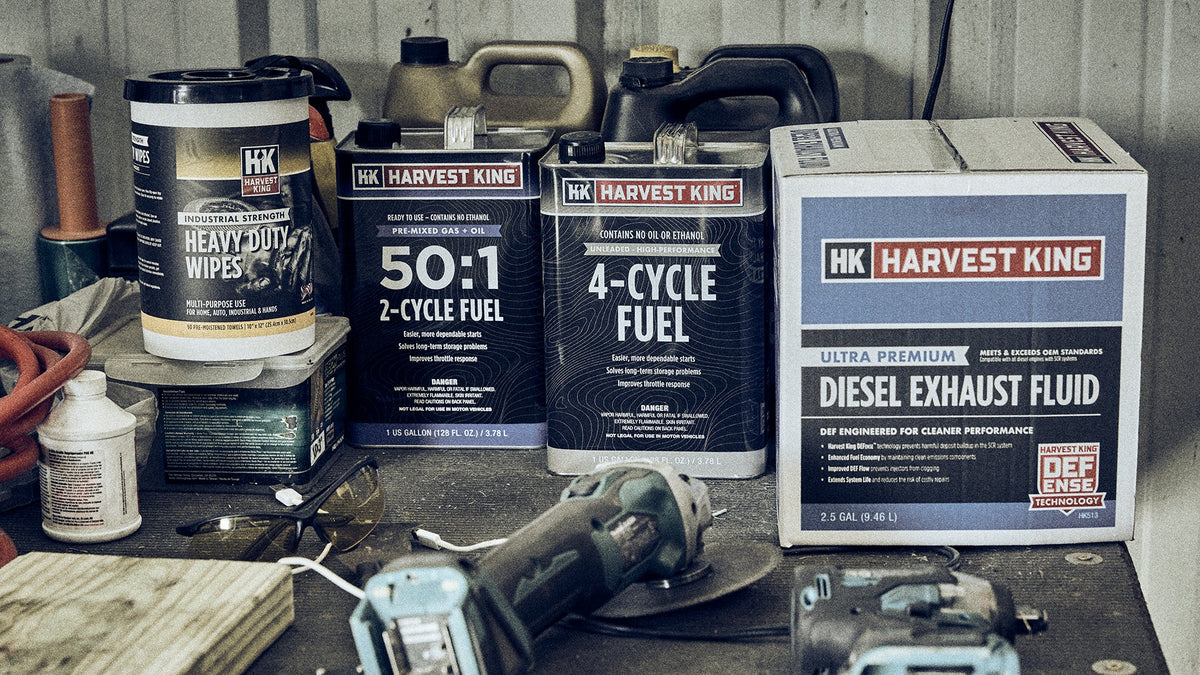
Engineered fuel can simplify the plan for equipment that uses small amounts of fuel or sits for long periods. Harvest King 4-Cycle Fuel is ethanol-free, oil-free, and rated at 92 octane. Harvest King 40:1 and 50:1 2-Cycle Fuels are ethanol-free, 92-octane products pre-mixed with synthetic oil. The ready-to-use formulas remove ratio guesswork and are designed to support easier starts after equipment has been idle for months.
No fuel should be stored indefinitely. Follow the product label for handling and storage, keep track of when the container was opened, and inspect the fuel before use. The goal is not to create the largest fuel stockpile. It is to keep enough correct, dependable fuel available for the equipment and the job.
Emergency generator safety: Never operate a generator indoors, in a garage, or near doors, windows, or vents. Carbon monoxide can kill without warning. Follow the generator manufacturer's placement, fueling, cooling, and operating instructions.
Protect what keeps your kingdom running
Harvest King engineered small-engine fuels offer ethanol-free, 92-octane choices for four-cycle equipment and two-cycle engines requiring 40:1 or 50:1 fuel. Pair the correct fuel with regular inspection and rotation so seasonal and emergency equipment is ready when the work begins.


Leave a comment
This site is protected by hCaptcha and the hCaptcha Privacy Policy and Terms of Service apply.