
The problem is not simply that a fuel contains ethanol. The bigger issue is time. Lawn equipment, generators, chainsaws, trimmers, and blowers often sit for weeks or months between uses. During storage, fuel can oxidize, absorb moisture, and form gums or deposits. Small engines have narrow fuel passages and small carburetor components, so a relatively small amount of contamination can make starting and running difficult.
Why equipment that sits is more vulnerable
Vehicles use fuel regularly and typically have sealed, computer-controlled fuel systems. Many small engines use vented tanks and carburetors, and their fuel may remain in the same tank or bowl for an entire off-season. Ethanol is hygroscopic, which means it attracts water. Enough moisture can contribute to corrosion, poor combustion, and separation within the fuel. At the same time, the gasoline itself loses volatility and can leave varnish-like deposits.
That combination explains a familiar pattern: equipment ran well when it was parked, but will not start months later. It may start only with the choke fully engaged, surge under load, stall when the throttle opens, or leak because fuel-system components have deteriorated.
Common signs of a fuel-related storage problem
- Hard starting or repeated pulling with little response.
- Surging, hesitation, or stalling when the engine is placed under load.
- A strong stale-fuel odor or fuel that has changed color.
- Deposits in the tank, fuel lines, filter, or carburetor bowl.
- Equipment that starts on fresh fuel but runs poorly on fuel left from the previous season.
How to reduce storage problems
- Follow the equipment manual. Use the fuel type, octane level, and 2-cycle mix ratio specified by the manufacturer.
- Buy only what you can use while it is fresh. A large container is not a bargain if half of it sits long enough to become unreliable.
- Use clean, approved fuel containers. Keep containers tightly closed and stored in a cool, dry, well-ventilated location away from ignition sources.
- Keep water and debris out. Do not leave fuel containers open. Clean around the equipment's fuel cap before refueling.
- Prepare equipment before storage. Follow the manufacturer's instructions for draining, running the system dry, using stabilizer, or storing with approved fuel. The correct method varies by engine and fuel system.
-
Consider ethanol-free engineered fuel. For equipment used infrequently or stored between seasons, a purpose-built fuel can reduce concerns tied to ethanol, mixing errors, moisture absorption, and fuel degradation.
Choosing an engineered small-engine fuel
| Product | Use | Formula |
|---|---|---|
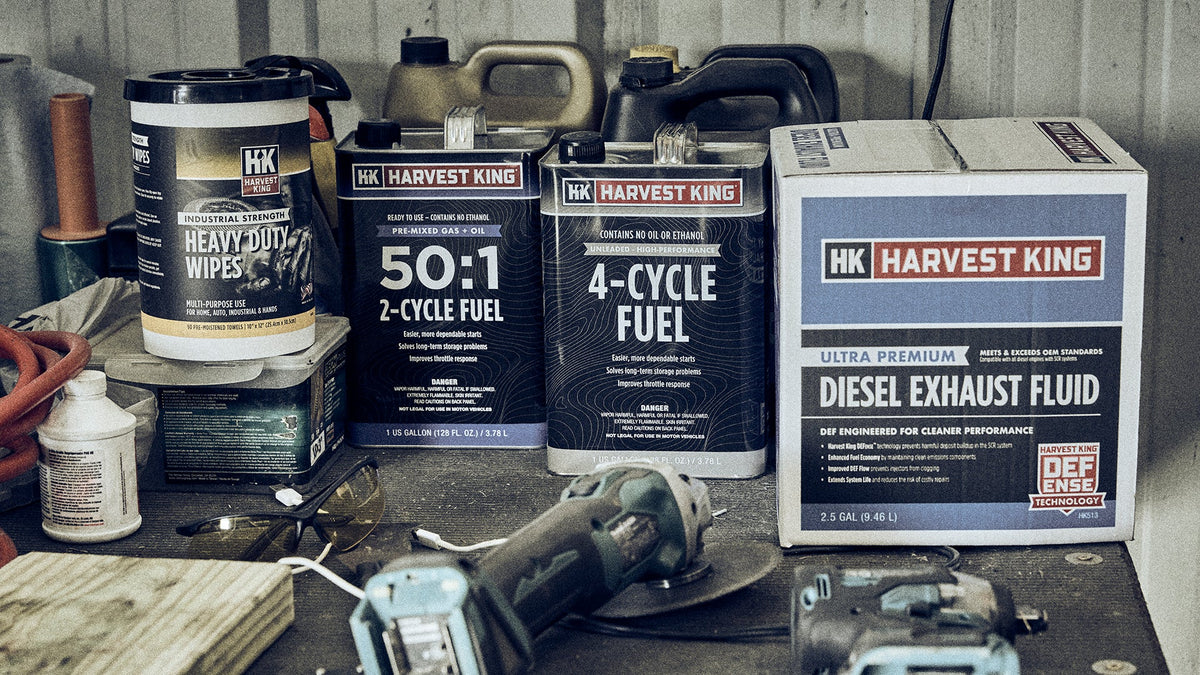
| Harvest King 4-Cycle Fuel | Four-cycle small engines | Ethanol-free, oil-free, 92-octane unleaded fuel |
| Harvest King 50:1 2-Cycle Fuel | Two-cycle engines requiring a 50:1 ratio | Ethanol-free, 92-octane, ready-to-use blend of gasoline and synthetic oil |
| Harvest King 40:1 2-Cycle Fuel | Two-cycle engines requiring a 40:1 ratio | Ethanol-free, 92-octane, ready-to-use blend of gasoline and synthetic oil |
Harvest King engineered fuels are formulated to support easier starts after storage, protect carburetors and fuel systems from moisture and deposits, improve throttle response, and reduce carbon buildup. The 2-cycle products also eliminate the measuring errors that can happen when gasoline and oil are mixed by hand. Always use the exact ratio required by the equipment.
Fuel safety: Gasoline vapors are extremely flammable and harmful. Store and handle fuel only in approved containers, away from heat, sparks, and open flames. Harvest King engineered small-engine fuels are not legal for use in motor vehicles. Read the product label before use.
Harvest King engineered-fuel products
Protect what keeps your kingdom running
Harvest King 4-Cycle Fuel and pre-mixed 40:1 and 50:1 2-Cycle Fuels provide ethanol-free, 92-octane options for small engines that work hard, sit between uses, or need dependable seasonal storage.


Leave a comment
This site is protected by hCaptcha and the hCaptcha Privacy Policy and Terms of Service apply.